Last updated: July 17, 2026
Check PDF Metadata Before Sharing a Resume, Contract, or Client File
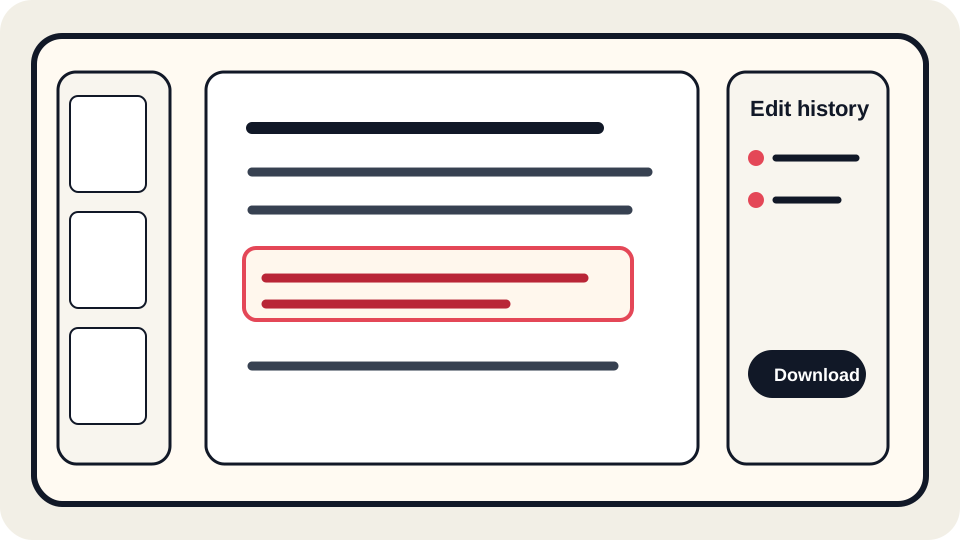
A PDF can reveal information that is not obvious on the page. The visible content may look clean while the file name, title, author, comments, attachments, form values, or previous workflow information still exposes private details. Before sending a resume, contract, invoice, proposal, school form, or client file, perform a metadata and sharing review.
What metadata can reveal
PDF metadata can include a title, author, subject, keywords, creator application, producer, creation date, modification date, and sometimes custom fields. Some of this is harmless. Some can be embarrassing or sensitive. A resume may reveal a previous company laptop account. A contract may show an internal project name. A proposal may retain a template title from another client. Even when metadata is not legally sensitive, it can make a document look careless.
Start with the file name
The file name is often more visible than the metadata. Recipients may see it in email previews, download folders, portal upload histories, and document management systems. Use a clear name such as Jordan-Lee-Resume-2026.pdf or Invoice-1042-Acorn-Studio.pdf. Avoid draft labels, internal notes, salary expectations, client nicknames, or old employer names unless they are required.
Visible page review
- Zoom through the header and footer on every page.
- Check comments, revision marks, and note icons if the viewer displays them.
- Inspect signatures and initials to make sure they are intended for this recipient.
- Search for private words such as an old client name, internal code name, or personal identifier.
- Confirm that blank pages are intentionally included.
Metadata and hidden object checklist
| Item | Why check it | Typical action |
|---|---|---|
| Title | May show an old template or client name | Set a neutral title or remove if unnecessary. |
| Author | May reveal a personal account or organization | Use the sender, company, or blank value as appropriate. |
| Creator/Producer | Shows the software used to create the PDF | Usually harmless, but review for sensitive internal tooling. |
| Comments and annotations | May include negotiation notes or review history | Delete or flatten only when the recipient does not need them. |
| Attachments | Embedded files can be easy to miss | Remove unintended attachments before sharing. |
| Form values | Hidden or previous values can remain in some workflows | Review the exported copy and use the correct form submission method. |
Resume-specific checks
For resumes, check the document title, file name, contact information, embedded links, and the copied text. Recruiter systems may parse text from the PDF, so copy a few sections into a plain text editor to see whether names, dates, and headings remain understandable. If the copy output is scrambled, the PDF may still look fine but parse poorly.
Contract and client-file checks
For contracts and client files, review comments, tracked negotiation notes, hidden attachments, and version labels. Avoid sending a file named “final-final-redline-clientB.pdf” to a different client. Check whether the file should include selectable text or whether a flattened version is required. If a signature workflow is required, use that workflow rather than a simple visual mark.
Metadata versus true redaction
Removing metadata is not the same as redacting visible text, and redacting visible text is not the same as removing comments or attachments. Treat these as separate checks. If confidential information appears on the page, use a real redaction process. If confidential information exists in metadata or attachments, remove those fields or rebuild the document from a clean source.
How JUST FREE PDF fits into the workflow
Use JUST FREE PDF for practical page review, simple edits, and export checks. The editor can help you notice visible issues, but you should still inspect metadata using a viewer or tool that exposes document properties. For high-risk legal, financial, medical, or regulated documents, use a controlled offline or enterprise workflow that includes metadata sanitization and audit requirements.
Before-send checklist
- Rename the file clearly.
- Open document properties and review title, author, subject, and keywords.
- Search the PDF for old client names, internal notes, and private identifiers.
- Inspect annotations and attachments.
- Copy important text into a plain editor to test parsability.
- Open the final exported PDF in a second viewer.
- Send the cleaned version, not the working draft.
Link and accessibility checks
Metadata is not the only non-obvious information in a PDF. Embedded links can point to draft folders, private cloud documents, tracking links, or outdated portfolio pages. Click or inspect important links before sharing. For resumes and proposals, also check whether headings and copied text make sense. A file can look polished while applicant-tracking or document-management software reads the text in the wrong order.
If accessibility matters, confirm that the exported PDF still has useful selectable text and that important information is not delivered only as an image. A visually clean PDF that cannot be parsed may create problems for screen readers, search, and automated intake systems.
FAQ
Is metadata always bad?
No. Metadata can help organize files and improve accessibility. The risk is unintended metadata, not metadata itself.
Does printing to PDF remove metadata?
It may remove some information and add other information. Do not rely on it as a complete sanitization method without checking the result.
Should I remove all comments?
Only if the recipient does not need them. In legal or review workflows, comments may be part of the intended record.